
What is considered a good open rate and click rate
A clear guide to understanding email open rates and click rates — what’s normal, what’s not, and what to do if yours seem low.
There’s nothing better than sending an email and seeing people open it and click. But what do those numbers actually mean? And what’s considered “good” today?
Let’s break it down in simple terms.
First: What are open rates and click rates?
Open rate
The percentage of your total recipients who opened your email.
Click rate (click-through rate)
The percentage of your total recipients who clicked on a link within your email.
Example:
If you send an email to 100 subscribers:
45 open it → 45% open rate
4 click a link → 4% click rate
What’s considered a good open rate?
Across most industries, average benchmarks today look like this:
Average open rate: 30–40%
Average click rate: 2–5%
These numbers have been updated from older industry averages (previously around 20–22% open rates). Open rates have increased across the industry primarily due to Apple Mail Privacy Protection and similar privacy features automatically triggering opens.
Important: Open rates are less reliable than they used to be
In recent years, open tracking has changed significantly because of:
Apple Mail Privacy Protection (MPP)
Image preloading by email apps
Privacy-focused email clients
Security filtering systems
These tools can register an “open” even if a human didn’t actually read your email.
So while open rates are still useful, they are no longer a perfectly accurate measure of engagement. Think of them as a directional signal, not a precise measurement.
What’s considered a good click rate?
Click rates are generally a stronger indicator of real engagement because they require a person to take action.
For most senders:
2–3% → typical
4–5%+ → strong
6%+ → excellent (especially for sales or launch emails)
However, click tracking isn’t perfect either.
Security bots can affect clicks
Some inbox providers and corporate email systems use security bots that:
Automatically scan links
Click every link immediately upon delivery
This can inflate click rates in some cases.
So again, clicks are helpful, but not flawless.
When should you be concerned?
Very low open rates (for example, under 15–20%)
This may signal:
Your emails are landing in spam
Your domain isn’t properly authenticated
Your audience is very cold or inactive
Your subject lines aren’t resonating
If your open rates suddenly drop significantly, that’s usually a deliverability signal — and worth investigating.
High opens but very low clicks
This may indicate:
Your subject line is strong, but content isn’t aligned
Your call-to-action (CTA) isn’t clear
You included too many links
The offer isn’t compelling
Where to find your open and click rates in Flodesk
For a single email campaign:
Go to your Emails tab.
Hover over the sent email.
Click View Results (or the chart icon).
Select View details.
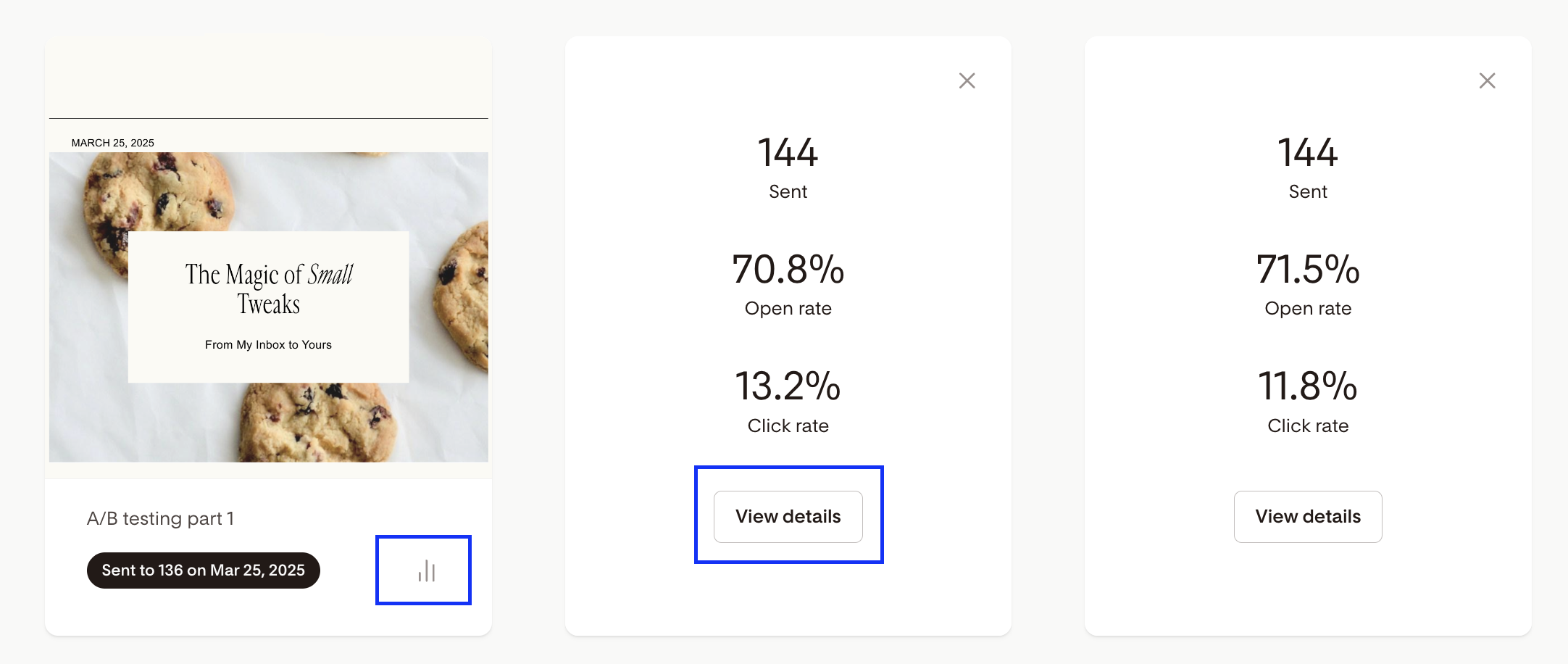
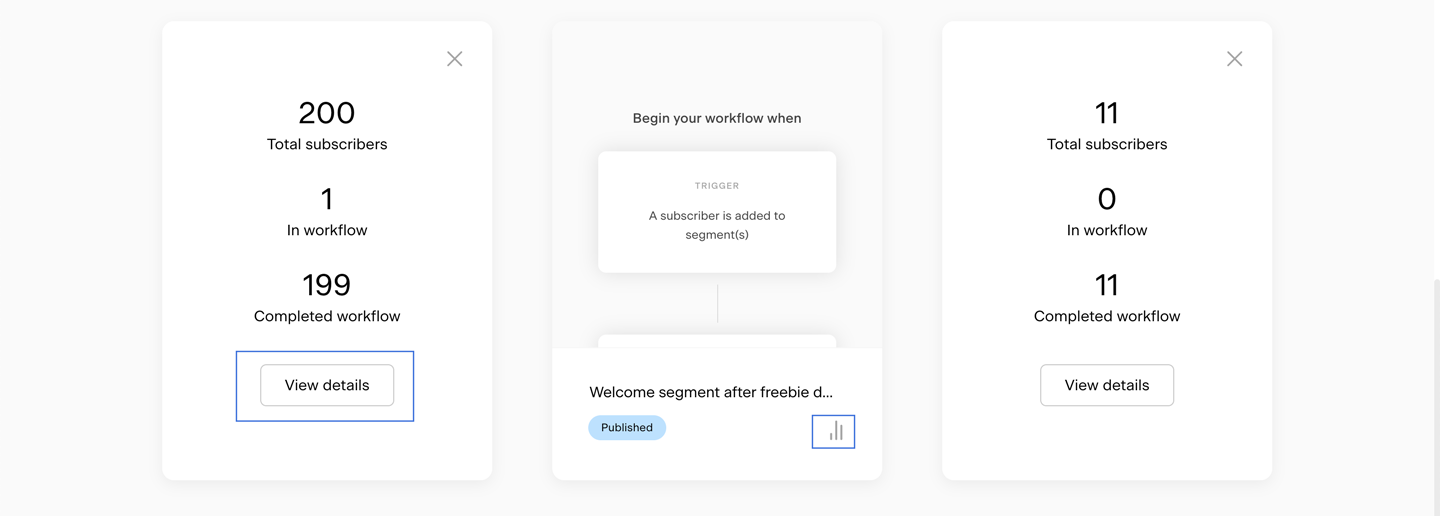
For workflow emails:
Go to Workflows.
Hover over a published workflow's card.
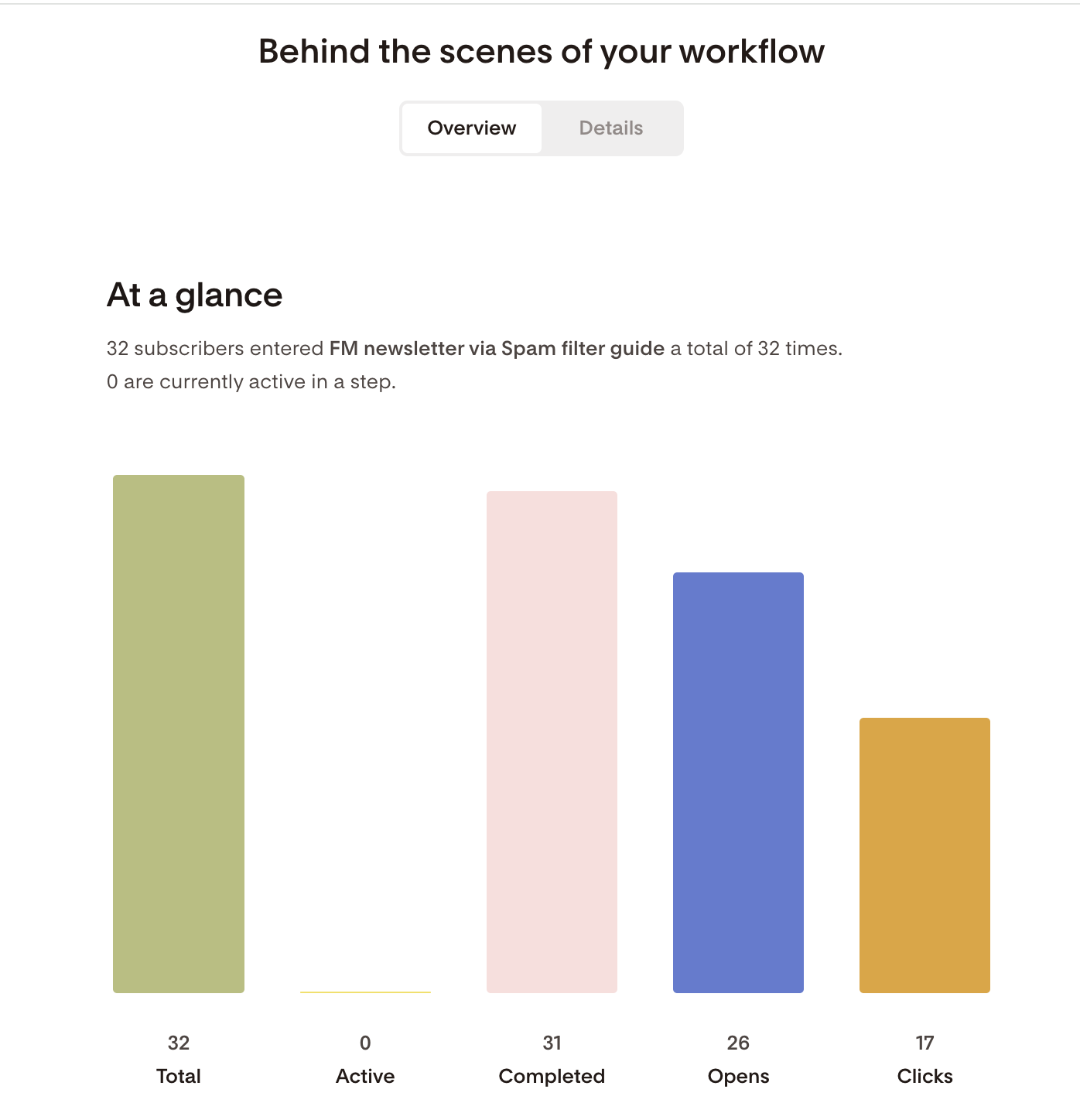
Click the chart icon > View details.
View the Overview and Details tabs.
How to improve your open rates
Even though open rates aren’t perfectly accurate anymore, they still reflect subject line performance and inbox placement.
Try this:
Write clear, benefit-driven subject lines.
Keep subject lines short (especially for mobile).
Avoid spammy wording (ALL CAPS, excessive punctuation).
Personalize when appropriate.
Test different send days and times.
Regularly clean inactive subscribers from your list.
If many subscribers use Gmail and you see clipping issues, make sure your email size isn’t too large.
How to improve your click rates
Clicks measure action, and action comes from clarity.
Here’s what helps:
1. Focus on one main CTA
Too many links can reduce action. Simplicity wins.
2. Make your CTA obvious
Place it:
Above the fold (visible without scrolling)
Again at the bottom if needed
3. Segment your audience
Send relevant content to smaller groups. Relevance increases clicks.
4. Align subject line + content
If your subject promises one thing but the email delivers another, clicks drop.
5. Provide value first
Educational, helpful, or inspiring emails often build trust and better long-term click behavior.
What matters more than benchmarks?
Your own trends.
Instead of asking:
“Is 32% good?”
Ask:
“Is this better or worse than my last 5 emails?”
Your audience is unique. What’s “good” for someone else may not apply to you.
Track patterns over time:
Are opens increasing?
Are clicks improving?
Which topics perform best?
That’s where real insights live.
Summary
Average open rates today: 30–40%
Average click rates: 2–5%
Open rates are less reliable due to privacy protections.
Click rates can be influenced by security bots.
Very low open rates may signal spam or deliverability issues.
Use benchmarks as guidelines — not grades.
Email marketing is a long game. Consistency and learning from your own data wins every time.
FAQs
Why did open rates increase compared to older industry reports?
Open rates appear higher today primarily because of Apple Mail Privacy Protection and similar privacy tools that preload tracking pixels. This can register an “open” even if a subscriber didn’t manually open the email.
Should I stop tracking open rates?
No. Open rates still help you spot trends and potential deliverability issues. Just avoid treating them as exact engagement measurements.
Are click rates more accurate than open rates?
Generally yes — but not perfect. Some security systems automatically click links to scan for threats, which can slightly inflate numbers.
What open rate means I’m landing in spam?
If your open rates consistently fall below 15–20%, especially after previously being higher, that may indicate inbox placement issues. It’s worth reviewing domain authentication and list health.
What’s more important: open rate or click rate?
Click rate usually reflects stronger engagement because it measures action. However, both metrics together give you better context.
My open rate dropped after switching platforms. Is that normal?
Yes, it can happen. Inbox providers build sender reputation over time. It’s normal to see fluctuations during transitions.
What’s better: more opens or more clicks?
Clicks. Opens show curiosity. Clicks show intent.